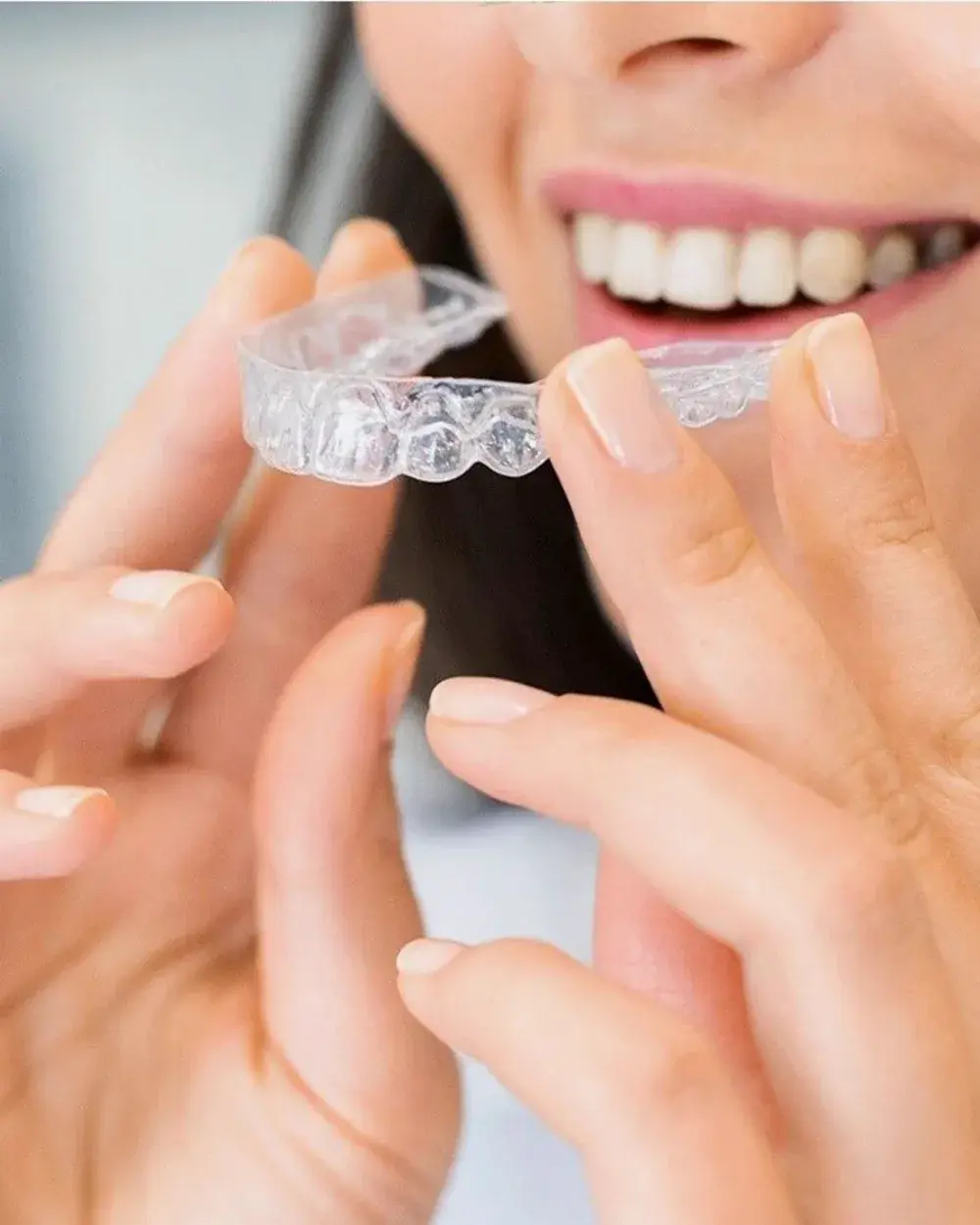
Invisalign and fixed braces are both orthodontic tools. Neither is automatically more advanced, more effective or more suitable for every person.
The right choice depends on the movements your teeth need, the way your upper and lower teeth meet, how consistently you can follow instructions, and how much visibility or removability matters to you.
The main practical difference
Fixed braces stay attached to the teeth throughout treatment. Clear aligners are removable trays worn according to the orthodontist's prescribed schedule.
That difference affects eating, cleaning and day-to-day convenience, but it also affects treatment control. A removable appliance only works while it is being worn.
When clear aligners may suit you
Aligners are attractive to people who want a less visible appliance and prefer being able to remove it for meals and brushing.
They can treat many common alignment and bite problems, but suitability depends on the exact tooth movements required. Digital planning helps the orthodontist judge whether the planned movements are realistic.
You value a less visible appliance.
You can reliably follow the prescribed wear schedule.
Being able to remove the appliance for meals and cleaning matters to you.
Your orthodontist confirms that aligners can deliver the movements your case needs.
When fixed braces may be the better tool
Because braces are fixed to the teeth, they do not depend on remembering to put an appliance back in after meals. They can also give the orthodontist direct mechanical control over complex tooth movements.
For some bites, rotations or cases requiring more involved control, fixed appliances may be the simpler or more predictable option.
Cleaning and food are different
Aligners come out for eating, so there are fewer food restrictions, but teeth need to be kept clean before trays go back in.
Braces stay in place, which means brushing around brackets and wires requires more attention and certain hard or sticky foods may need to be avoided.
Do not choose from photographs alone
Two smiles that look similar from the front can have very different bite relationships underneath. Orthodontic treatment is not only about making the front teeth look straight.
An examination and records are what determine whether Invisalign, braces or another approach is appropriate.
Important
This guide is general information, not a diagnosis. Dental symptoms can overlap, and treatment decisions depend on an examination and any investigations that are clinically useful.