Wisdom teeth are the last molars at the back of the mouth. Some erupt into a useful, cleanable position and never need treatment.
Problems are more likely when a tooth is partly erupted, impacted, difficult to clean or positioned in a way that affects the tooth in front.
Repeated pain or gum infection
A partly erupted wisdom tooth can leave a flap of gum where food and bacteria collect. Recurrent pain, swelling or inflammation in that area is a common reason for assessment.
Food trapping and decay
A difficult-to-clean wisdom tooth can decay itself or make the back surface of the neighbouring molar hard to maintain. Damage to the tooth in front is one reason removal may be advised.
Impaction alone does not answer the question
An impacted tooth is one that cannot erupt into a normal functional position. Some impacted wisdom teeth remain symptom-free and disease-free, so the decision should consider clinical and radiographic findings rather than the word 'impacted' alone.
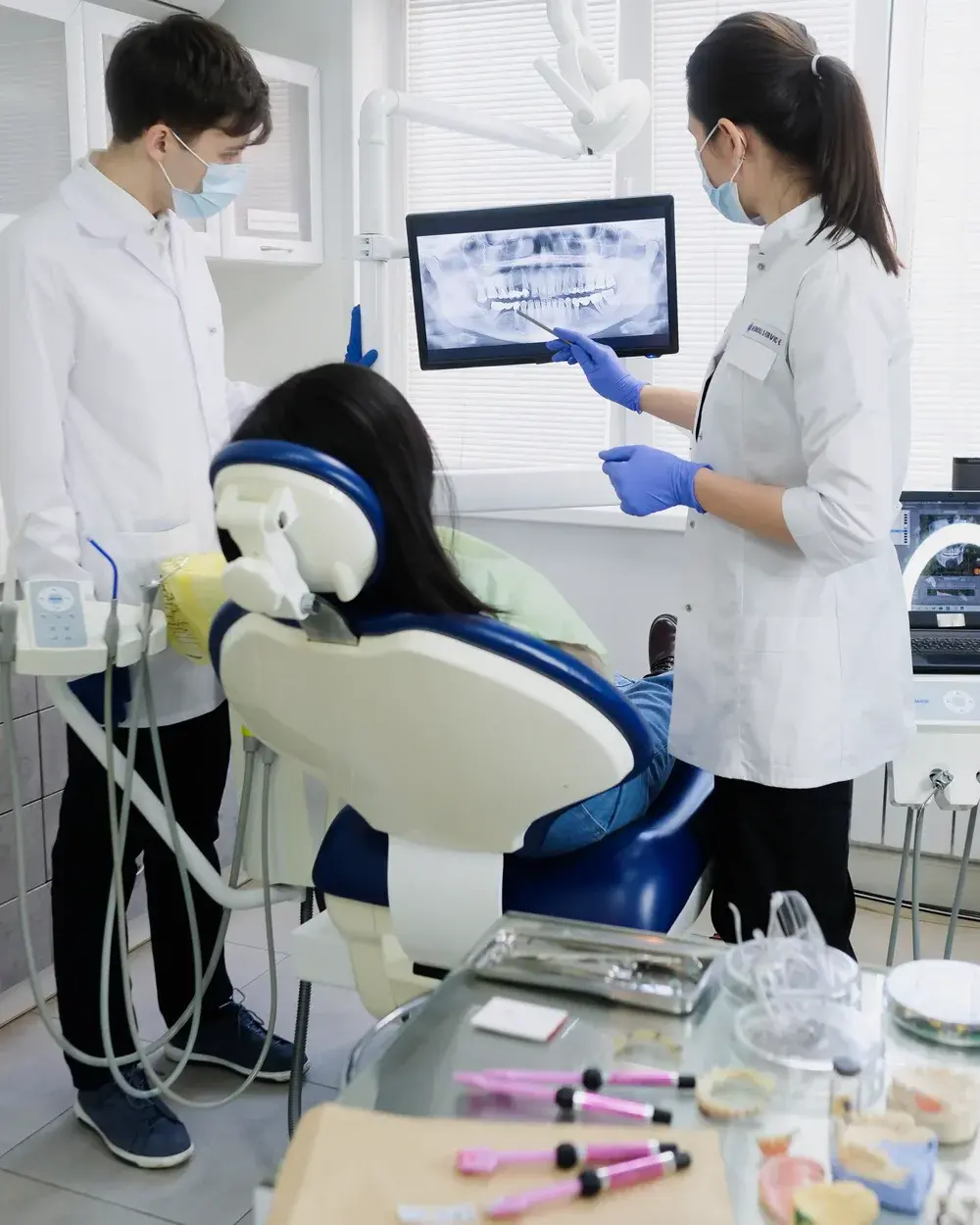
An X-ray helps show position and nearby anatomy
Imaging can show the angle of the tooth, its relationship to the neighbouring molar and other anatomical structures. This helps the dentist judge both the reason for removal and the complexity of the procedure.
Swelling and difficulty opening the mouth need prompt review
Increasing swelling, fever, difficulty opening the mouth or worsening pain can indicate acute infection and should be assessed promptly.
Important
This guide is general information, not a diagnosis. Dental symptoms can overlap, and treatment decisions depend on an examination and any investigations that are clinically useful.